Accelerate Onboarding for New Reps: AI Coaching and Invisible Assistance During Live Calls
Bringing new sales reps up to full productivity is one of the highest-leverage activities for any revenue organization — and one of the hardest to do well. Traditional onboarding relies on shadowing, recorded call reviews, classroom training, and manager time. Those methods are valuable, but they focus on what happened, not what to do in the moment.
This article explains how modern AI meeting assistants can accelerate ramp time by providing real-time coaching and invisible assistance during live calls. It covers common onboarding bottlenecks, compares post-call analytics tools objectively, and shows practical playbooks enablement teams can apply today. Examples are tailored to sales enablement leaders, new and junior reps, sales managers, and HR owners of onboarding programs.
(For a hands-on example of invisible live meeting assistance, see https://olva.ai.)
Why onboarding speed matters — and where it breaks down
Faster ramp time directly reduces cost-per-rep and increases quota capacity. The problem is that many onboarding failures are about timing and context:
- New reps hear product messaging in training but can't recall the right language during a live demo.
- They face objections they haven't practiced and freeze or use weak responses.
- Managers spend hours listening to recordings and giving feedback after the fact — feedback that arrives too late to help the current conversation.
Most existing tools emphasize capture and review: recording, transcription, conversation analytics, and post-call coaching. Those are essential for continuous improvement, but they don’t help a rep steer a live interaction — the moment that actually wins or loses deals.
What modern onboarding needs: live, contextual, private coaching
The ideal onboarding system delivers guidance at the point of interaction: subtle, context-rich, and private. That means three capabilities are required:
- Real-time understanding of the conversation (live transcription + context).
- Intelligent detection of important moments (questions, objections, buying signals).
- Actionable guidance delivered to the rep without disrupting the meeting.
When those are combined, new reps receive the support they most need: suggested responses, definition of jargon, verification of claims, and prompts for next questions — all while the conversation is happening.
Where conversation intelligence tools help — and where they fall short (fair comparison)
Products like Gong and Chorus have changed how organizations QA calls and coach reps by offering excellent conversation analytics, call scoring, and post-call coaching workflows. They do a great job of identifying patterns across calls, surfacing common objections, and enabling managers to scale feedback.
Strengths:
- Robust recording, searchable transcripts, and analytics dashboards.
- Leaderboards and call scoring to standardize best practices.
- Useful for structured coaching sessions and performance reviews.
Limitations relative to live assistance:
- Primarily post-call. Feedback and insights arrive after the interaction is over.
- Live participation is usually visible (a coaching user or bot may need to join a meeting) or requires separate coach shadowing.
- Less focus on private, in-the-moment prompts that help a rep turn the dial during a call.
Acknowledging these strengths helps organizations combine approaches: continue using analytics platforms for strategic coaching, while layering live assistance for tactical, moment-of-impact support.
Invisible AI assistance: the missing link for fast ramp
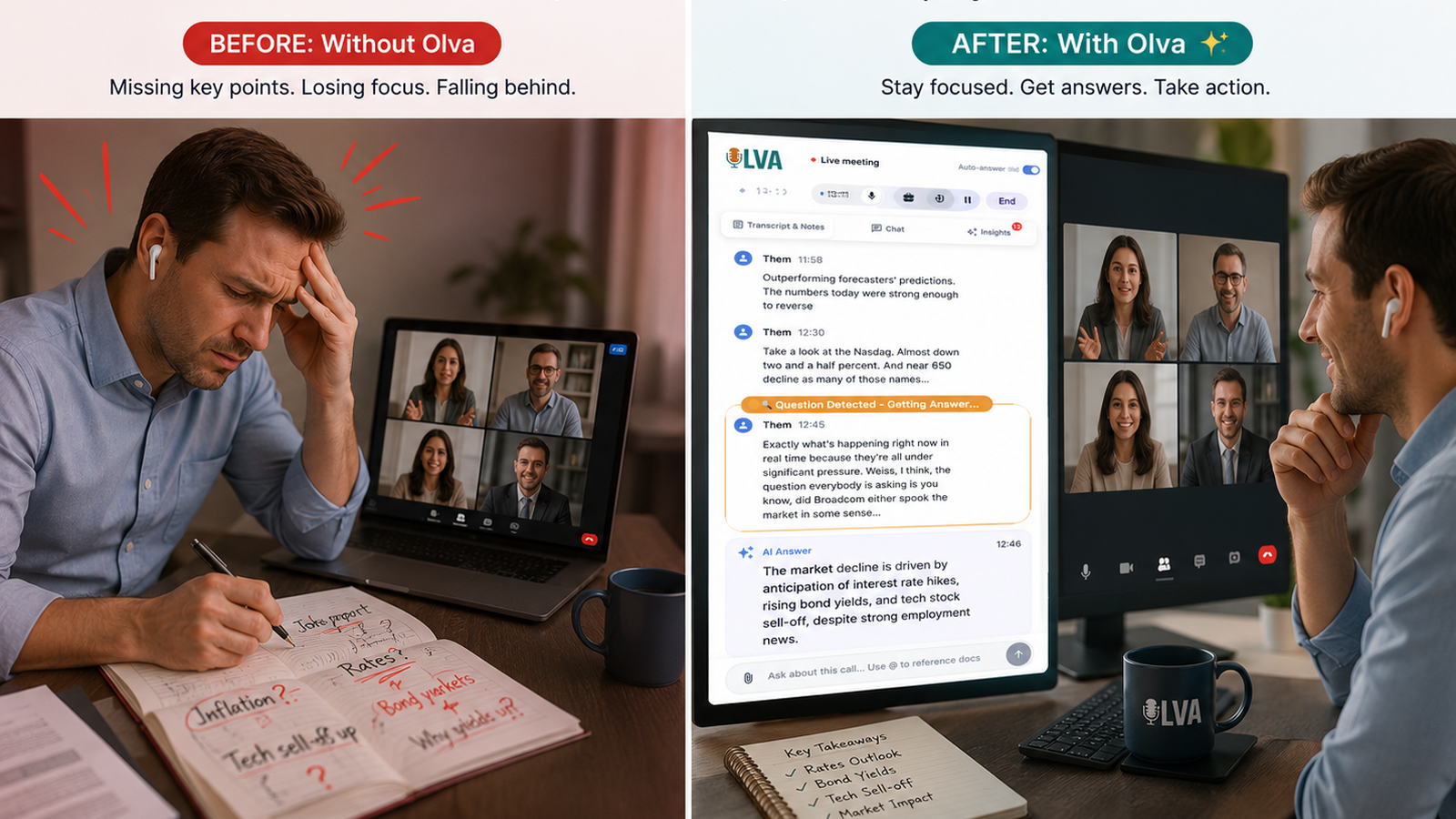
Invisible AI meeting assistants bring guidance into the call without interrupting participants. Here’s what that looks like in practice and why it matters for onboarding.
- Invisible by design: The assistant doesn’t join the meeting as a visible bot participant, so customers aren’t distracted and privacy is preserved.
- Live transcription: Everything spoken during the meeting is transcribed in real time for context and searchable memory.
- Automatic question detection: The system flags or surfaces customer questions, objections, and signals as they occur.
- Instant answers and suggested responses: When a question or objection is detected, the assistant can propose phrasing, fact checks, or reference material based on stored documents.
- Live Q&A for the rep: Reps can privately ask "What should I say next?" and get immediate suggestions tailored to the current conversation.
Taken together, these features turn onboarding into a live apprenticeship: reps get help when they need it most — during the call.
Practical examples and playbooks
Below are concrete scenarios showing how live AI coaching shortens ramp time.
Example 1 — First discovery call (new rep)
- Situation: A junior rep is on a discovery call and the prospect uses industry-specific jargon.
- Live assistance: Invisible AI detects the unfamiliar term in real time, privately displays a short definition and two follow-up questions to clarify the prospect’s priority.
- Outcome: The rep asks better clarifying questions, captures the real pain, and qualifies the lead more accurately.
Playbook tip: Upload your product glossary and competitor comparison docs so the assistant can define terms and highlight differentiators during calls.
Example 2 — Pricing objection in negotiations
- Situation: The prospect hears price and says "That’s too expensive."
- Live assistance: Automatic question detection flags the objection. The assistant suggests a rebuttal tailored to the account segment and pulls a contract clause or case study related to ROI.
- Outcome: The rep responds with confidence, cites a relevant ROI example, and secures a follow-up pilot.
Playbook tip: Feed historical win/loss notes and pricing playbooks into the assistant so it can recommend proven objection-handling language.
Example 3 — Product demo handoff
- Situation: The rep needs to hand the conversation to a technical SME but wants to surface the top technical concerns.
- Live assistance: The assistant summarizes the last five minutes and highlights three technical risks expressed by the prospect, plus suggested handoff phrasing.
- Outcome: The SME arrives prepared and the meeting proceeds efficiently.
Playbook tip: Use document-aware intelligence to attach technical specs and architecture diagrams the assistant can reference during the handoff.
Example 4 — Manager shadowing at scale
- Situation: Managers can’t sit in on every call. They need a way to scale coaching without becoming a bottleneck.
- Live assistance: Managers receive flagged moments and can listen to short clips or read instant summaries. They then send a short private coaching note to the rep after the call, or schedule a quick follow-up.
- Outcome: Coaching becomes targeted and timely, reducing redundant shadowing hours.
Playbook tip: Set up automated alerts for specific signals (e.g., repeated pricing objections) so managers can prioritize coaching time.
Live insights that teach, not just record
Beyond immediate suggestions, an effective live assistant generates insights that accelerate learning:
- Opportunity detection: Flags buying signals and potential upsell cues during the conversation so reps can pursue the most promising next steps.
- Fact checking: Verifies claims made during calls against uploaded documentation or known data, reducing misstatements.
- Suggested follow-ups: Recommends next questions and proposed collateral to send.
These features help new reps translate training into behavior by reinforcing best practices at the moment they’re most needed.
Document-aware intelligence and post-meeting memory
Fast onboarding depends on context. Uploading sales playbooks, case studies, pricing sheets, and legal templates lets the assistant reference accurate information live.
- During the call: The assistant can pull exact contract language or a pricing tier explanation to support responses.
- After the call: Post-meeting memory provides searchable recaps, action items, and open questions — perfect for structured 1:1s and manager reviews.
This combination — live access to documents plus persistent memory — reduces the cognitive load on new reps and shortens the time to autonomy.
Privacy and adoption considerations
When deploying live AI coaching, organizations must address trust and compliance:
- Invisible assistance preserves the meeting experience because there’s no visible bot joining the call.
- Transcripts and data should be private by default and visible only to authorized users, with clear retention controls.
- Allow reps to opt into coaching modes during training and make transcript deletion available.
These controls encourage adoption by both sellers and customers and ensure HR and legal teams can sign off on the program.
Metrics to measure impact on ramp
To prove value, track both behavioral and outcome metrics:
- Ramp time reduction (days/weeks to quota attainment).
- Win rate for newly onboarded reps vs. historical cohorts.
- Average deal size and velocity for new reps.
- Coach-to-rep time saved (hours/month).
- Usage signals: frequency of live prompts, types of questions asked, and document lookups.
Correlate increases in rep confidence (surveys) with objective outcomes (conversion rates) to validate the coaching program.
Implementation checklist for enablement and HR
- Define the goals: shorten ramp time, improve qualification accuracy, or reduce time managers spend on shadowing.
- Gather content: playbooks, objection-handling scripts, product glossaries, pricing sheets, and case studies.
- Pilot with new cohorts: start with a small group of new reps and a few managers. Use real calls during live shadowing sessions.
- Train reps on how to use private prompts and view suggested responses discreetly.
- Iterate: collect feedback, refine the assistant’s recommended phrasing, and expand document libraries.
- Report outcomes: share ramp metrics and quote-level improvements across stakeholders.
Conclusion — shift coaching from hindsight to insight
Traditional conversation intelligence tools transformed post-call coaching. The next step for high-performing sales organizations is to bring that intelligence into the meeting itself. Invisible, document-aware AI coaching turns onboarding into an apprenticeship that happens in real time: new reps get private, contextual guidance, managers scale coaching more efficiently, and HR delivers measurable reductions in ramp time.
This doesn’t replace the strategic value of analytics platforms — it complements them. Use post-call analytics for pattern recognition and live assistance to change behaviors when it matters most.
To explore how invisible, live meeting assistance can accelerate onboarding in your organization, see a practical example at https://olva.ai and consider a small pilot with new cohorts to measure lift in weeks, not months.
By shifting coaching to the moment of impact, organizations can shorten ramp times, raise rep confidence, and win more deals — faster.