Bias-Reduced Hiring Panels: Use Live Insights and Automatic Question Detection to Hire Faster
Hiring teams are under pressure to move quickly while making fair, consistent decisions. Yet traditional interview processes—fragmented notes, post-meeting summaries, and human memory—leave room for bias, inconsistency, and slow decision cycles.
This article explains how talent teams can design bias-reduced hiring panels using live meeting intelligence: real-time transcription, automatic question detection, instant answers, and live insights. These capabilities reduce unconscious bias, keep interviews consistent across panels, and help teams arrive at faster, fairer hiring decisions. Throughout, we highlight how modern tools like Olva bring these live features into the interview room so hiring teams perform better during interviews—not just remember them later.
Why bias in hiring panels persists
Even well-intentioned hiring teams struggle with bias because hiring decisions rely on imperfect human processes:
- Interviewers ask different questions to different candidates.
- Panelists recall evidence selectively after the fact.
- Dominant voices can shape group judgment.
- Interview notes are inconsistent and hard to compare.
Many tools today focus on capturing what happened—recordings, transcripts, or post-meeting summaries. Those are valuable, but they don’t prevent biased behavior during the interview itself. To reduce bias meaningfully, teams need tools that assist live, helping interviewers stay on rubric, detect problematic language, and surface relevant information at the moment it matters.
Live meeting intelligence: a practical framework for bias reduction
Use this four-step framework when building bias-reduced hiring panels:
- Standardize before the interview
- Monitor and coach during the interview
- Surface structured evidence in real time
- Capture consistent post-interview memory
Below we explain each step and show practical examples of live capabilities that make them work.
1) Standardize before the interview
Preparation is the first line of defense against bias. Use a shared interview guide and role-specific rubric so all panelists ask the same core questions and evaluate the same competencies.
Practical actions:
- Upload the job description and interview rubric to a shared folder or an intelligent assistant so it can be referenced during the interview.
- Define the interview script: mandatory behavioral questions, scoring criteria, and deal-breakers.
- Run a short calibration session with hiring managers and interviewers.
How live document-aware tools help: when the job description, rubric, and legal guidelines are uploaded, the assistant can pull precise definitions and allowed topics into the meeting on demand. That keeps the panel aligned with the calibrated plan without sifting through files.
2) Monitor and coach during the interview
Bias often happens in the moment: off-script questions, leading language, or uneven speaking time. Live monitoring and coaching nudge interviewers back to the rubric.
Live capabilities that matter:
- Live transcription: captures every exchange so the panel can focus on the candidate rather than note-taking.
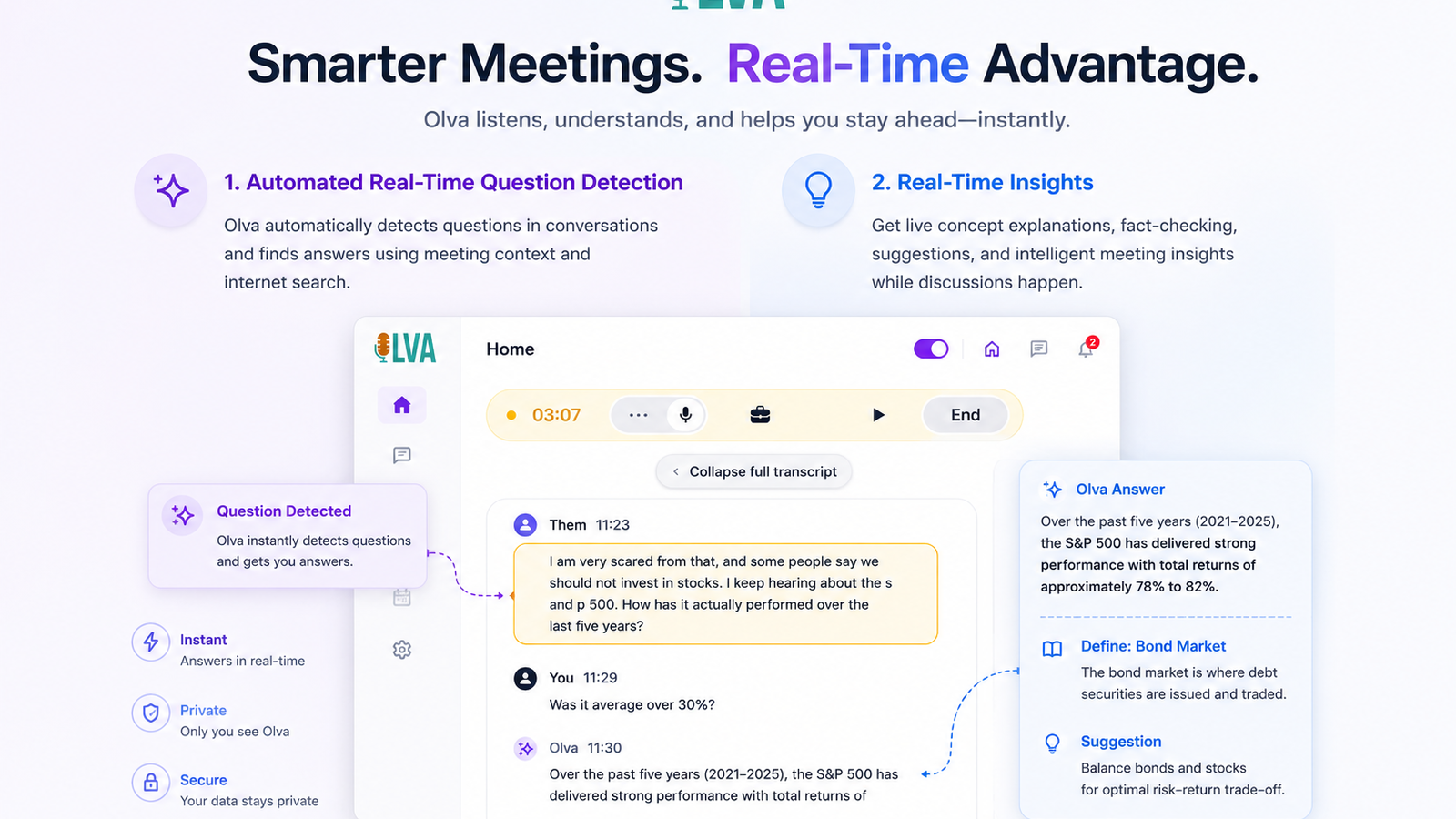
- Automatic question detection: flags when interviewers ask off-script or potentially problematic questions (for example, questions about family, age, or protected characteristics).
- AI coaching: suggests rephrases for leading questions and recommended follow-up probes to elicit behavioral evidence.
Example scenario:
During a panel interview, an interviewer starts with, “You don’t have young kids, right?” An assistant with automatic question detection can silently flag the question as potentially illegal and surface a private coaching prompt to the interviewer: “Avoid personal/family questions. Consider asking: ‘Can you describe how you prioritize workload during high-volume periods?’” This keeps the candidate comfortable and the panel compliant—without creating an awkward moment in front of the candidate.
3) Surface structured evidence in real time
Decisions are faster and fairer when panels see comparable evidence side-by-side. Live insights turn conversation into structured signals.
Key live insights include:
- Competency mapping: automatically map candidates’ answers to rubric categories (communication, problem-solving, collaboration).
- Opportunity detection: identify strong buy signals (specific product or domain knowledge) or red flags (conflicting work history).
- Talk-time and participation metrics: show whether one interviewer dominated the conversation, enabling immediate course correction.
Practical example:
A candidate describes a cross-functional project. The assistant maps the response to “collaboration” and suggests a short follow-up: “Can you describe the stakeholders involved and the communication cadence you maintained?” The panel captures consistent evidence against the rubric while the conversation is still live—so they don’t rely on memory later.
4) Capture consistent post-interview memory
Bias resurfaces when hiring teams reconstruct interviews from shaky memory. Post-meeting structures should be consistent and searchable.
What to capture:
- Timestamped evidence mapped to rubric items
- Detected questions and their categories
- Suggested follow-ups and decisions discussed during the panel
- A concise recap with action items (hire, next interview, decline)
With a searchable meeting history, recruiting ops can compare candidates reliably and audit decisions if needed.
Comparing traditional tools and live-first assistants
Many existing platforms excel at transcription, recording, and post-meeting summaries. Those features help asynchronous review, which is useful for distributed teams and compliance. Examples include Otter.ai for transcription and note capture, Gong and Chorus for sales conversation intelligence, and other meeting recorders.
What those tools do well:
- High-quality transcripts and searchable meeting archives
- Post-meeting insights and summaries
- Analytics for long-term trends
Where bias reduction requires more than post-hoc capture
Post-meeting tools help teams remember, but they don’t change behavior during the interview. For bias reduction, the decisive benefits come from live, private assistance that affects what interviewers do in the moment—without interfering with candidate experience.
What live-first assistants add:
- Invisible assistance that doesn’t join as a visible bot or interrupt the meeting
- Automatic question detection to catch off-script or illegal questions as they occur
- Instant answers and document-aware guidance so interviewers can reference policy, scorecards, and JD details privately and immediately
- Live coaching that helps rephrase and probe for evidence in real time
These live capabilities keep interviews fair and consistent while preserving a natural candidate experience.
Real-world scenarios and example scripts
Below are practical interview scenarios that demonstrate how live intelligence can reduce bias and speed decisions.
Scenario A: Keeping panels on script
- Setup: Panel uploads the rubric and mandatory behavioral questions before the interview.
- During interview: Live transcription runs. Automatic question detection flags a deviation: an interviewer asks about marital status.
- Private coaching: The assistant sends the interviewer a private suggestion: “Avoid asking about marital status. Consider: ‘How do you manage competing priorities when deadlines overlap?’”
- Outcome: The panel redirects to the rubric, collects comparable evidence, and avoids an EEO risk.
Scenario B: Prompting equitable follow-ups
- Setup: Interviewers agree to two follow-ups per competency.
- During interview: The assistant detects that the candidate gave a brief answer to a leadership question. It suggests a probing follow-up: “Ask for a specific example describing the candidate’s decision-making and outcome.”
- Outcome: Panels gather richer behavioral evidence across candidates, enabling fair scoring.
Scenario C: Faster, evidence-based decisions
- Setup: After the interview, the panel must decide within 48 hours.
- During interview: The assistant maps responses to rubric items and timestamps evidence.
- Outcome: The hiring manager reviews the structured evidence and the panel reaches a decision more quickly because comparisons are clear and consistent.
Implementation checklist for talent teams
- Define and upload standardized rubrics and interview scripts.
- Train interviewers on privacy and how live assistance appears (it should be invisible to candidates).
- Run short calibration sessions using the live assistant to practice rephrases and follow-ups.
- Use automatic question detection to build a short policy library (examples of prohibited topics and acceptable alternatives).
- Require timestamped evidence capture for each rubric item during every interview.
- Review meeting histories regularly to audit for bias trends and interviewer calibration drift.
Measuring success
Track measurable outcomes to know if your bias-reduction strategy is working:
- Reduction in off-script or flagged questions
- Shorter time-to-decision after final interview
- Higher inter-rater reliability on rubric scores
- Improved candidate experience scores related to fairness and clarity
- Fewer escalation or compliance incidents
Even without exact numbers, teams that adopt live, rubric-driven interview processes typically see faster decisions and clearer audit trails because evaluation becomes evidence-based and consistent.
Privacy and candidate experience considerations
Bias-reduced hiring must respect candidate privacy and avoid creating a mechanical or uncomfortable interview environment. Keep these principles front of mind:
- Invisible assistance: use tools that do not join as a visible bot or play notifications to candidates. The assistant should work privately for interviewers.
- Data control: transcripts and meeting notes should be visible only to authorized users and removable when policies require.
- Candidate consent: follow applicable laws and company policies about recording or transcribing interviews.
Olva is designed with privacy and invisibility in mind—helping interviewers privately without interrupting the candidate experience. For details about data handling and privacy practices, visit https://olva.ai.
Fair comparisons and vendor selection tips
When evaluating tools, consider these questions:
- Does the tool help during the interview or only after?
- Can it detect problematic questions and suggest alternatives in real time?
- Is the assistant invisible to the candidate and private for interviewers?
- Can it use uploaded rubrics and job documents to provide accurate, document-aware guidance?
- Does it produce structured, searchable post-interview records mapped to rubric items?
Many vendors excel at transcription and post-interview analytics; choose a vendor that adds live assistance, automatic question detection, and document-aware answers if bias reduction is a key objective.
Conclusion
Bias-reduced hiring panels require more than good intentions and post-hoc notes. They need real-time, private support that keeps interviews aligned with a rubric, flags risky questions, and surfaces structured evidence while the conversation is happening. That combination helps teams make faster, fairer decisions and improves candidate experience.
By standardizing rubrics, using live transcription, deploying automatic question detection, and leveraging document-aware instant answers, talent teams can dramatically reduce the small in-the-moment decisions that cumulatively create bias. Invisible, live-first assistants—without interrupting the candidate—are the practical next step for recruiting teams committed to consistent, evidence-based hiring.
For teams ready to bring live insights and intelligent coaching into hiring panels, explore how live meeting intelligence works in practice at https://olva.ai.