Win More Negotiations: Using Meeting Intelligence to Negotiate Contracts and Proposals
Negotiations are won long before a signature is applied. They are won in the preparation, in the moments when objections arise, and in the few seconds you have to answer a tough question. For consultants, legal ops professionals, account executives, product managers, and founders, meeting performance is often the decisive factor between closing a deal and losing momentum.
This guide explains how modern meeting intelligence — used live, not just for after-the-fact summaries — can tilt negotiations in your favor. Instead of treating meeting tools as a passive archive, learn how to use them as an active partner that spots buying signals, suggests responses, verifies claims, and helps you steer conversations toward agreement. Real-world examples and practical prompts are included to show how you can apply these ideas in client calls, contract reviews, and executive negotiations.
Reference: explore more at https://olva.ai.
Why winning negotiations requires better meeting intelligence
Negotiation is real-time problem solving across several dimensions: commercial terms, legal risk, technical fit, and stakeholder alignment. Traditional meeting tools focus on transcription and post-meeting analysis. Those outputs are valuable, but they miss the most important window: what happens while the conversation is still unfolding.
The modern competitive advantage is the ability to:
- Detect and diagnose objections as they happen.
- Surface the most relevant facts and clauses instantly.
- Coach the negotiator on tone, framing, and next questions.
- Identify opportunities to expand scope or secure commitment.
Meeting intelligence that works live helps you do all of the above without being intrusive or distracting the conversation.
Pre-meeting: prepare like a negotiator
Preparation remains critical. Use meeting intelligence tools to synthesize context and align stakeholders before you enter the room.
Actionable checklist:
- Upload contracts, SOWs, proposals, and relevant product docs to your meeting assistant so it understands the source materials.
- Use the assistant to produce a 3-minute brief summarizing the client history, open issues, and negotiation objectives.
- Flag non-negotiables and fallback positions. Create a prioritized list of issues to address: pricing, delivery timelines, indemnities, SLAs, penalties.
- Run mock objection scenarios and rehearse answers supported by facts and contract citations.
Why this matters: being prepared reduces cognitive load during the meeting and frees you to listen for signals rather than furiously taking notes.
During the meeting: turn intelligence into immediate advantage
This is where live meeting intelligence delivers disproportionate value. A good system helps you without being seen or interrupting the flow.
Key live capabilities and how to use them:
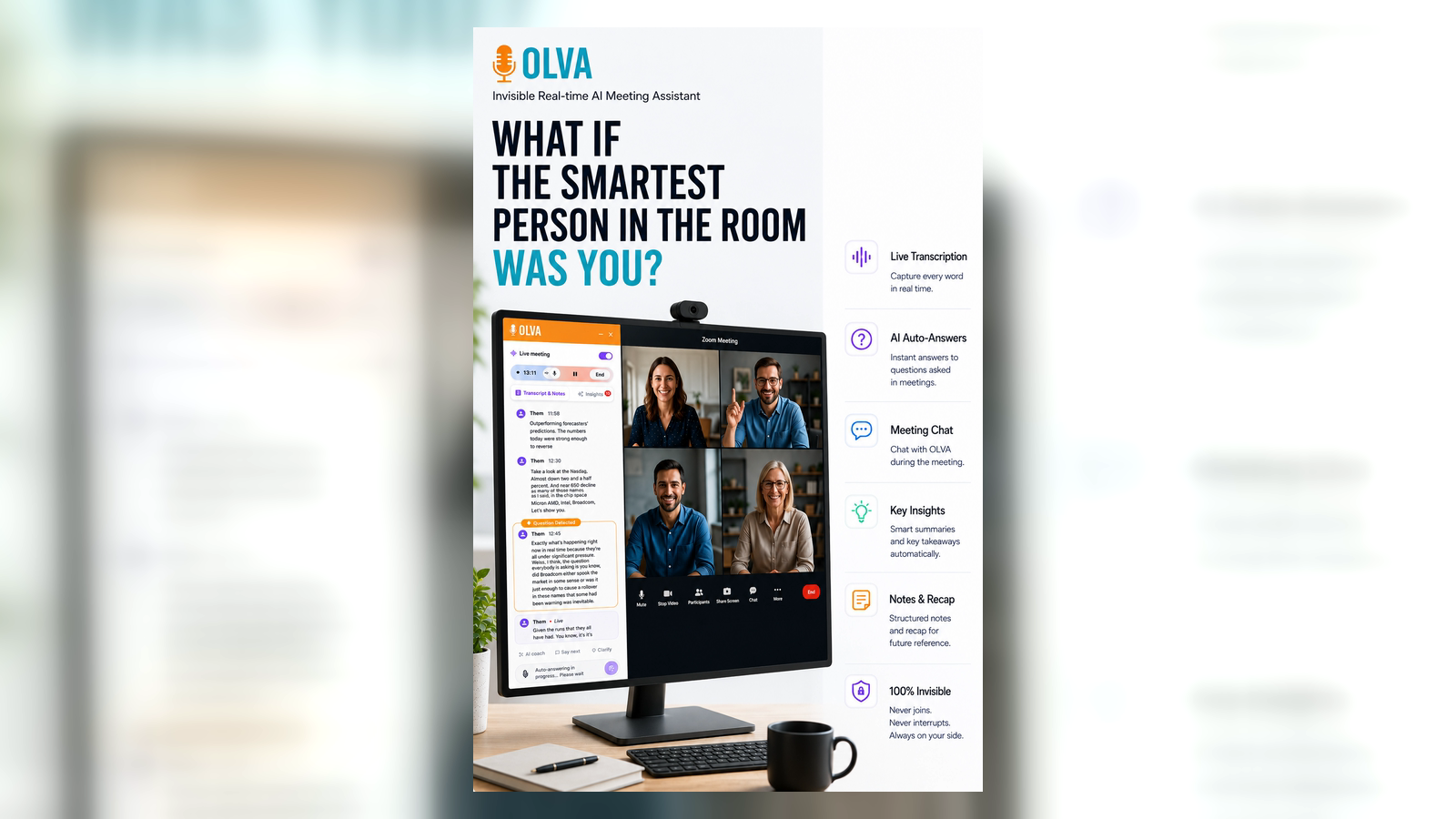
- Invisible assistant
- Have an AI assistant that listens and helps privately. There should be no extra bot participant or distracting notifications visible to others. Privacy by design ensures your coaching stays between you and the assistant.
- Live transcription
- Use real-time transcripts to ensure nothing is missed. This is invaluable when multiple stakeholders speak quickly or when complex clauses are discussed.
- Automatic question detection
- Let the assistant detect objections, pricing pushback, and clarification requests automatically. You don’t have to manually mark or flag things; the system surfaces questions as soon as they happen.
- Instant answers and document-aware intelligence
- When a counterparty asks about a specific clause or capability, ask the assistant to fetch the relevant contract clause or product spec and generate an immediate, concise response. The assistant uses uploaded documents and meeting context to craft accurate answers.
- Live Q&A and AI coaching
- Ask the assistant privately what to say next, how to reframe a concession, or which concession would be acceptable. For example: 'What follow-up question can I ask to confirm intent?' or 'Suggest a concise answer to the logistics objection.'
- Live insights, fact checking, and opportunity detection
- The assistant flags potential risks (e.g., ambiguous SLA language), identifies buying signals (e.g., schedule requests), and fact-checks claims in real time.
Practical live prompts you can use in a negotiation:
- 'Summarize the last three minutes.'
- 'What objection did the CFO just raise?'
- 'Find the contract clause about termination and suggest a short answer.'
- 'Is the proposed delivery timeline feasible given our standard SOW?'
- 'What follow-up question would clarify their budget certainty?'
These prompts keep you grounded, reduce reaction time, and improve the quality of your responses.
Practical examples by role
Consultants
- Scenario: A client questions the recommended timeline and wonders if outcomes justify the cost.
- Live intelligence actions: the assistant pulls case-study results from your uploaded documents, highlights a similar engagement ROI, and suggests language to reframe cost as an investment tied to measurable KPIs.
- Result: You present a concise, evidence-backed answer that keeps the client focused on outcomes rather than price.
Legal Ops
- Scenario: A procurement rep presses for a broad indemnity and shortened negotiation cycles.
- Live intelligence actions: the assistant locates the exact indemnity clause in the draft, flags industry-standard modifications, and privately proposes a compromise clause plus fallback points.
- Result: You respond with precise contract language that addresses counterparty concerns while protecting legal interests.
Account Executives
- Scenario: A buyer hints at a potential pilot but asks for a significant discount.
- Live intelligence actions: the assistant detects buying signals, suggests qualifying questions to confirm intent (timeline, decision makers), and recommends a tiered pilot structure with performance-based pricing.
- Result: You steer the conversation from discount demands to a pilot designed to prove value and justify price.
Product Managers & Founders
- Scenario: Prospective customer asks whether your product supports a complex integration.
- Live intelligence actions: the assistant references technical specs, suggests a short demo offer, and helps craft a clear response that sets expectations and opens a path to a technical deep-dive.
- Result: You maintain credibility and momentum without overpromising.
Competitor landscape: what other tools do well (and where live intelligence adds value)
There are established meeting platforms and conversation intelligence tools—Otter for transcription, Gong and Chorus for sales call analysis, and various contract review platforms that surface risks after review. These tools are strong at capturing and analyzing talk after it happens and are valuable for coaching, pipeline analysis, and compliance.
Where live meeting intelligence differs:
- Timing: Most tools analyze recordings after meetings. Live intelligence provides assistance during the meeting when decisions and impressions are formed.
- Interaction model: Instead of only producing post-call coaching, live systems offer private, real-time suggestions and answers that influence the conversation immediately.
- Document awareness in-context: Some tools can link transcripts to documents later; live intelligence uses uploaded contracts and specs in the moment to produce accurate, on-the-spot language.
The best practice is to acknowledge the strengths of recording-and-review platforms and then add live intelligence as a complementary capability that improves immediate negotiation outcomes.
Post-meeting: secure agreement and accelerate close
After the meeting, your meeting intelligence system should translate the live insights into action.
Post-meeting workflow:
- Immediate recap: generate a crisp meeting recap with decisions, open issues, and next steps.
- Action items and owners: auto-extract follow-ups and assign owners and due dates.
- Memory and search: store the meeting transcript and highlights in a searchable memory so you can reference past concessions, promises, and commitments in future negotiations.
- Continuous learning: compile recurring objections and successful rebuttals to improve future negotiation playbooks.
This loop from live assistance to post-meeting memory ensures that the value of each negotiation compounds over time.
Privacy and professional etiquette
When using meeting intelligence during live negotiations, privacy and discretion matter. Look for solutions that:
- Operate as an invisible assistant with no bot joining the call.
- Keep transcripts and data visible only to authorized users, with the ability to delete or redact content.
- Avoid broadcasting or creating participant-facing notifications during sensitive conversations.
This approach preserves professional trust while still providing the competitive edge of live intelligence.
Getting started: a simple 30-day playbook
Week 1: Setup and upload
- Pick two recurring negotiation types (e.g., new contract, renewal).
- Upload templates, sample contracts, and product specs to your meeting assistant.
- Define 3 negotiation objectives and fallback positions.
Week 2: Practice and rehearse
- Run internal role-plays with your AI assistant on private calls.
- Capture suggested language and refine your playbook.
Week 3: Pilot in live meetings
- Use the assistant invisibly in low-risk client calls.
- Practice private prompts and review the assistant’s suggested responses post-call.
Week 4: Iterate and scale
- Analyze the assistant’s detected objections and successful responses.
- Share anonymized learnings across the team and update contract templates and playbooks.
Within a month you will have a living negotiation playbook rooted in real conversation data.
Conclusion
Winning negotiations requires more than subject-matter expertise; it requires the ability to process information, test hypotheses, and respond with confidence in the moment. Live meeting intelligence transforms meetings from passive recordings into active, private support systems that help you find agreement faster and with less risk.
For consultants, legal ops, account executives, product managers, and founders, the practical benefits are clear: fewer missteps, faster closes, and more disciplined concessions. By combining invisible assistance, live transcription, automatic question detection, instant document-aware answers, and AI coaching, you can change not only how you remember meetings, but how you perform in them.
To learn how live meeting intelligence can fit into your negotiation workflow, visit https://olva.ai.