Turn Advice into Revenue: Scale Coaching Programs with Live Q&A & Automatic Question Detection
Coaches, consulting firms, course creators, and product managers know that advice is only valuable when it leads to action. Scaling coaching programs means more than adding seats—it means increasing conversion, improving client outcomes, and turning insights into measurable revenue. The best way to do that is to improve the quality of each interaction, especially during live sessions when decisions are made and objections arise.
This article explains how live Q&A and automatic question detection—paired with real-time AI coaching—help you scale coaching programs while improving client conversion and retention. Practical examples and workflows illustrate how these capabilities work in real-world situations, and how modern meeting intelligence (not just post-meeting notes) changes the game.
Read on for tactical steps you can apply to your coaching or course business, plus a fair look at where traditional tools shine and where live-first solutions like Olva bring unique value. For more on the technology discussed here, see https://olva.ai.
Why scaling coaching programs fails (and how live intelligence fixes it)
Many organizations try to scale coaching by: expanding class sizes, hiring more coaches, or creating on-demand content. Those approaches help with reach but not with conversion or outcome consistency. Common failure modes:
- Missed objections: Participants voice concerns that go unanswered or are answered poorly.
- Generic follow-ups: Coaches use one-size-fits-all follow-ups that don’t align with the conversation history.
- Lost signals: Buying intent and expansion opportunities emerge during live calls but are noticed only later—if at all.
- Overreliance on post-meeting notes: Summaries help memory but can’t change the outcome of the live interaction.
Live Q&A and automatic question detection address these by shifting the assistance from after the meeting to during the meeting. That means better answers, targeted questions, and timely coaching when it matters most.
Core capabilities that drive revenue
When you design a scalable, revenue-focused coaching program, focus on capabilities that improve live performance:
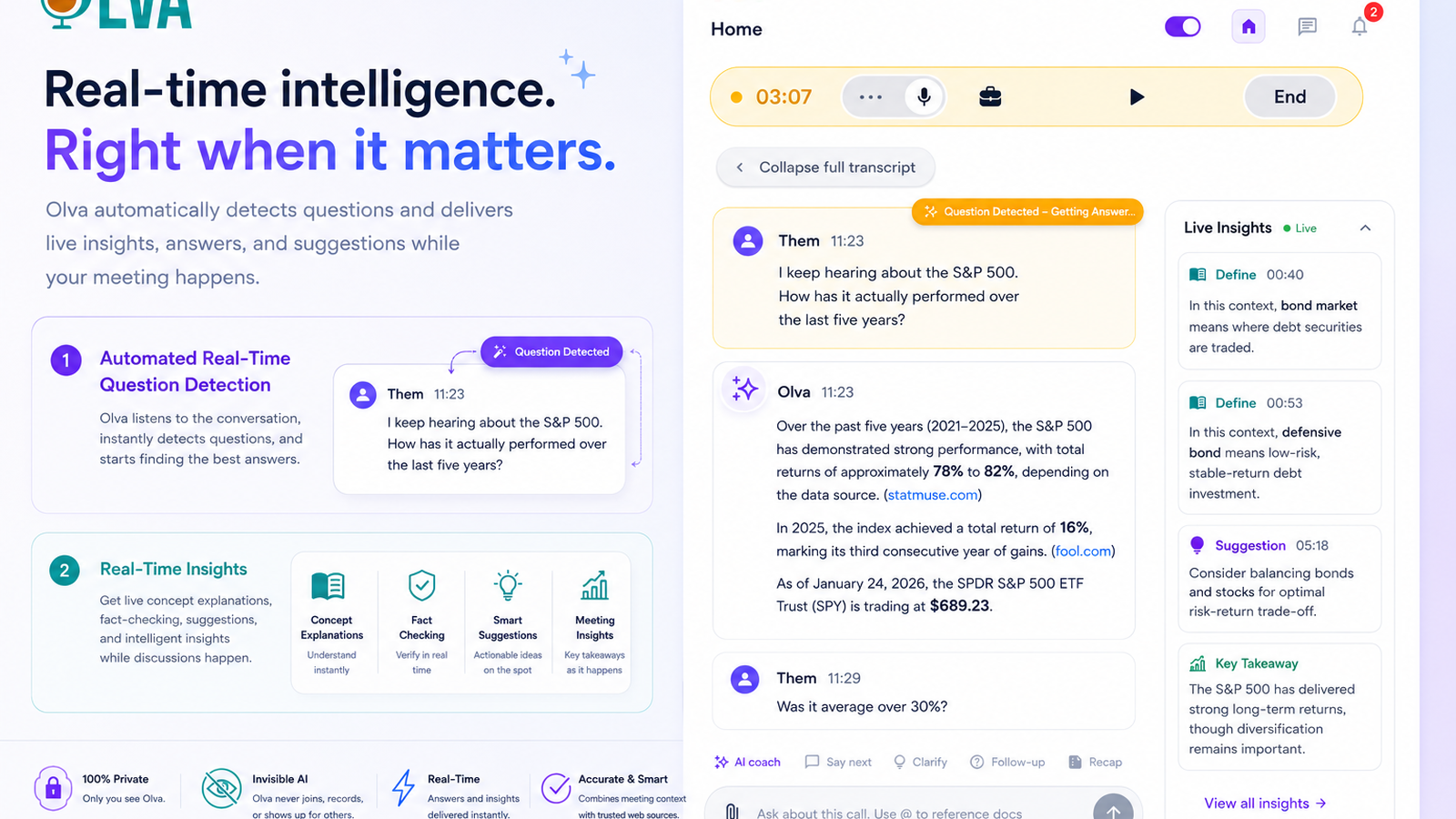
- Automatic question detection: Identifies customer objections, pricing questions, technical clarifications, and buying signals as they happen.
- Live Q&A: Coaches can ask the AI for suggested responses, clarifications, or follow-up questions in real time.
- Instant answers: The AI generates context-aware answers using meeting content and uploaded documents (contracts, product guides, course materials).
- Live insights & opportunity detection: The system surfaces fact checks, terms to define, upsell signals, and risks during the conversation.
- AI coaching: Private, on-the-spot advice for tone, phrasing, and next steps that keeps the coach focused on the client.
- Document-aware intelligence: The AI uses uploaded resources to provide accurate, specific answers aligned with your materials.
- Invisible operation & privacy: Works without joining as a visible bot—no awkward notifications and privacy by design.
Together, these capabilities let coaches act faster, respond more accurately, and convert more frequently.
Practical example #1 — One-on-one coaching session
Scenario: A leadership coach runs a paid 1:1 session. Midway, the client expresses doubt about adopting a suggested framework because of budget and timeline concerns.
How live-first AI helps:
- Automatic question detection flags the objection as a budget-related buying signal.
- Live insights suggest a short reframing script and recommends a case study from the coach’s uploaded files that demonstrates ROI.
- The coach uses Live Q&A to ask: “How can I reframe this for a budget-constrained client?” and receives a succinct response tailored to the conversation context.
- The coach shares the case study link on-screen (Invisible Screen Share Mode keeps the assistant hidden) and uses the suggested script to close the moment.
Result: The client’s concern is addressed in real time, the coach demonstrates credibility with evidence, and the chance of conversion or continued engagement improves.
Practical example #2 — Group course AMA (Ask Me Anything)
Scenario: A course creator runs a weekly live AMA for premium students. With 100+ participants, many questions arrive at once.
How live-first AI helps:
- Automatic question detection prioritizes high-value questions (e.g., “How do I implement this in our tech stack?”) and groups duplicates.
- Live Q&A provides concise, document-aware answers that reference course modules or external documentation.
- Live insights surface common confusion points so the instructor can create targeted micro-lessons or follow-up resources.
Result: Students receive faster, higher-quality answers. The course creator reduces churn and increases upsell potential for 1:1 coaching packages.
Practical example #3 — Consulting firm client kick-off
Scenario: A consulting firm runs a 60-minute kick-off call with a new enterprise client. Analysts raise a product-integration question that could change the scope.
How live-first AI helps:
- Automatic question detection catches the scope-sensitive question and flags it as a potential scope/contract risk.
- Instant answers reference the uploaded contract, the project scope doc, and similar past engagements in memory.
- AI coaching suggests phrasing for a scope-preserving follow-up question and recommends a short, next-step agenda addendum.
Result: The consulting team preserves margins, clarifies expectations during the call, and creates a clean follow-up path—reducing rework and protecting revenue.
Competitors: What they do well, and where live-first intelligence adds value
Several tools provide excellent transcription, recording, and post-meeting analytics (for example, Otter.ai, Gong, and Chorus). They help teams review calls, extract trends, and train reps using historical data.
Strengths of traditional tools:
- High-quality transcripts and searchable archives
- Robust analytics across multiple calls
- Useful training material for post-call learning
Limitations relative to live-first approaches:
- Most insights arrive after the decision point—too late to influence outcomes.
- Question detection often happens in post-call analysis, not in real time.
- AI coaching and instant, document-aware answers during live calls are limited or absent.
Where live-first solutions (like Olva) add unique value:
- Detects and classifies questions automatically while the conversation is happening.
- Provides instant, context-aware answers sourced from meeting content and uploaded documents.
- Offers private, in-call AI coaching that helps the facilitator respond in the moment.
- Operates invisibly (no bot participants), preserving meeting etiquette and privacy.
Acknowledging competitor strengths is important: recording and retrospective analytics remain essential. The difference is that live-first intelligence directly changes meeting outcomes.
Tactical roadmap to scale with live Q&A and automatic question detection
- Start with the right meetings: Prioritize high-impact sessions—sales demos, premium coaching, onboarding, and enterprise negotiations.
- Upload core documents: Contracts, case studies, pricing sheets, and course syllabi. Document-aware intelligence gives better instant answers.
- Configure question categories: Train the system to prioritize objections, pricing questions, technical questions, and expansion signals relevant to your business.
- Coach the coaches: Teach facilitators how to use Live Q&A in a subtle way—ask for phrasing suggestions, evidence citations, or recommended follow-ups.
- Use Live Insights to build microcontent: When a common confusion appears, create targeted short modules or templates to reuse across cohorts.
- Measure revenue impact: Track conversion, upsell rates, churn, and time-to-decision before and after implementing live-first support.
Measuring success: what to track
- Conversion rate during or immediately after live calls (did answers close deals?)
- Reduction in follow-up meetings required to resolve the same questions
- Decrease in churn for cohorts receiving live-assisted sessions
- Time-to-close for consultative deals
- Upsell and expansion signals surfaced during live calls
These metrics show the direct revenue impact of turning better answers into better outcomes.
Privacy and user experience: invisible assistance matters
Scaling coaching programs must respect client privacy and meeting etiquette. Invisible AI assistance provides two major benefits:
- No bot participants or awkward indicators during client-facing calls.
- Sensitive conversation data remains private by design—transcripts can be deleted and data visibility is controlled by the user.
This combination ensures that coaches and clients feel comfortable and that the technology enhances—not disrupts—the human interaction.
Getting started: a sample playbook for coaches and product managers
Week 1: Pilot selected meetings
- Choose 8–12 high-impact sessions (premium coaching calls, consults, or AMAs).
- Upload supporting documents (case studies, pricing, product guides).
- Enable automatic question detection and set categories.
Week 2: Train facilitators
- Run a short training session for coaches on using Live Q&A and following AI suggestions.
- Practice phrasing suggestions and using document-aware answers.
Week 3: Iterate on content
- Use Live Insights to identify recurring confusion and create micro-lessons or templates.
- Update course materials or playbooks accordingly.
Month 2: Measure and expand
- Review conversion and churn metrics.
- Scale to more sessions and cohorts once results show improvement.
Conclusion: Turn better answers into measurable revenue
Scaling coaching programs isn’t just a logistics challenge—it’s a live performance problem. The highest-leverage improvements happen during the conversation when questions, objections, and opportunities appear. Tools that focus only on after-the-fact transcription and summaries miss the most important window: the moment a decision is being made.
By combining automatic question detection, live Q&A, instant, document-aware answers, and private AI coaching, organizations can improve conversion, reduce churn, and create repeatable revenue-generating workflows. These capabilities let coaches and product teams do what humans do best—build trust and close—while the AI handles timing, fact-checking, and context.
For teams ready to move beyond post-meeting analysis and into real-time performance improvement, investigate live-first meeting intelligence solutions like Olva at https://olva.ai. Improving what happens during the meeting is the fastest path from advice to revenue.