
From Better Predictions to Better Conversations: The Intelligence Behind OLVA
Most stories about artificial intelligence begin with a model. This one begins with pressure: thousands of competitors, unforgiving leaderboards, and predictions that had to work beyond the lab.
Nima Shahbazi is a Canadian AI scientist and entrepreneur behind OLVA. Long before OLVA, his work was shaped by a simple discipline: build systems that can find signal in difficult data, measure them honestly, and keep improving until they are useful in the real world.
That path—from competition-grade machine learning to intelligence that can help people during live conversations—offers a window into the ambition behind OLVA.
A career built under measurement
Machine-learning competitions make performance visible. Every assumption is tested against the same data, every improvement has to earn its place, and reputation follows reproducible results rather than presentation.
Nima became a Kaggle Competitions Grandmaster and was formerly ranked No. 1 in Canada and No. 19 worldwide. His public competition record spans forecasting, recommendation systems, natural-language search, financial modeling, pricing, and large-scale prediction.
$1M
Zillow Prize
Shared by the winning three-person team
3,800+
Competing teams
Representing 91 countries
#1
Former Canada rank
No. 19 worldwide on Kaggle
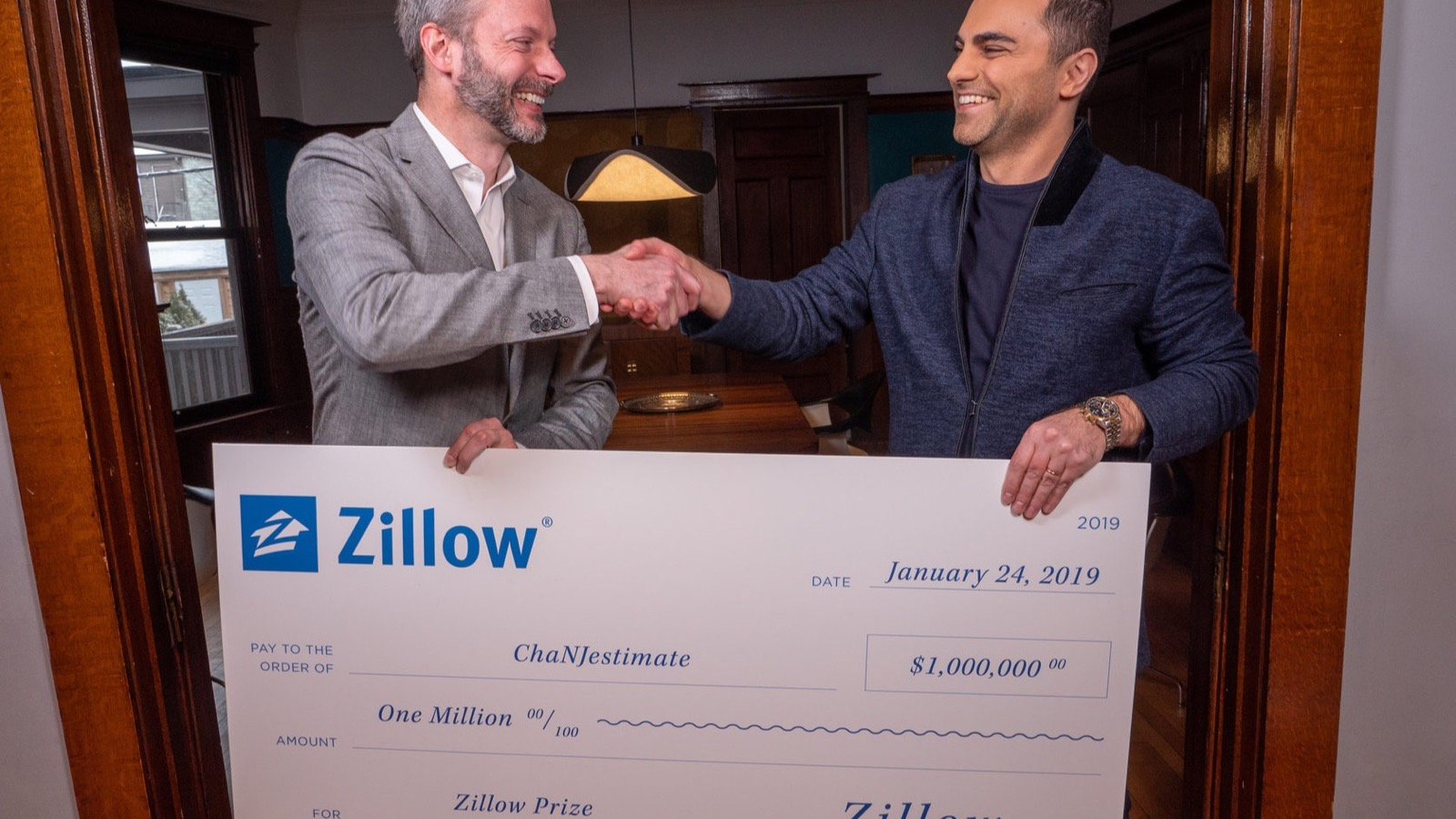
The defining result came with the $1 million Zillow Prize. Nima formed the international team that outperformed more than 3,800 teams from 91 countries. His approach improved on Zillow's benchmark by roughly 13 percent and helped reduce the Zestimate's nationwide error rate.
IEEE Spectrum documented the winning result, while NVIDIA described the deep-learning system and tools behind it. York University's Lassonde School, where Nima earned his PhD, later invited him to speak about the path from research and Kaggle competition to applied AI.
That challenge did not end with the competition. CNN later examined how difficult it is to apply AI-generated home valuations to real-world buying decisions—a reminder that model accuracy and operational judgment are different problems.
But the lasting lesson was larger than a leaderboard. A model creates value only when its prediction reaches a person in a form they can use.
From prediction to judgment
The problems changed over time, but the pattern remained: find context, separate signal from noise, and deliver the result before the moment to act has passed.
Nima's work expanded from predictive modeling into applied AI systems, including large language models, retrieval-augmented generation, agentic architectures, and production machine-learning operations. His public speaking has taken that practical perspective to technical and executive audiences at events including Kaggle Days, ReWork summits, RBC Disruptors, and Canada AI Day.
The Canada AI Day speaker program highlighted both sides of that experience: a record in global AI competitions and leadership building advanced AI systems at organizational scale. The Mindle speaker profile documents the broader arc across competitions, applied work, and public talks.
Through all of it, one question kept becoming more important: what happens after the model produces an answer?
The question that became OLVA
Prediction is powerful, but people rarely make decisions in isolation. They make them in meetings, interviews, negotiations, classrooms, sales calls, and ordinary conversations—often while information is incomplete and time is moving quickly.
What if intelligence could arrive inside that moment?
What if a person could understand context, recall an important detail, overcome a language or technical barrier, or find the right words without leaving the conversation to search for help?
That question became OLVA.
To turn that vision into a product, Nima Shahbazi was joined by two longtime friends, Hamed Shafiee and Ali Tezerjani. Drawing on years of trust and complementary experience, the three came together to build OLVA as a product of Mindle—combining Nima's background in advanced AI with a shared ambition to make intelligence available when human judgment can still change the outcome.
Invisible intelligence for real conversations
OLVA is designed as an invisible, real-time AI meeting assistant. It does not join a call as a visible meeting bot. Instead, the desktop companion works alongside the meeting tools people already use, including Zoom, Google Meet, Microsoft Teams, Slack huddles, Webex, and in-person conversations.
During a conversation, OLVA can provide multilingual live transcription, detect spoken questions automatically, generate contextual answers and coaching, and draw on attached documents when relevant. Afterward, it preserves useful meeting memory through summaries, insights, history, and follow-up questions.
The distinction matters. Many AI meeting products begin after the conversation ends. OLVA is built around the live moment—the point where context, confidence, and a well-timed answer can matter most.
The idea in one sentence
Bring useful intelligence into the conversation without pulling people out of it.
Competition-grade thinking, human-scale purpose
There is a direct line from Nima's earlier work to this product philosophy.
Competition-grade machine learning demands measurable performance. Production AI demands reliability, context, and restraint. Conversation intelligence adds another requirement: the system must respect the pace and attention of the person using it.
That is why OLVA's ambition is not simply to generate more information. It is to help people use the right information at the right time—with less interruption and more confidence.
For Nima, the move from prediction systems to OLVA is less a change of direction than an expansion of purpose. The same drive to make models more accurate now meets a harder, more human question: how can intelligence make someone more capable while the moment is still unfolding?
What comes next
OLVA now spans desktop and mobile, supports 87 language and regional options, and is built for conversations online and in person. The long-term ambition is broader: an invisible intelligence layer that can accompany people wherever important conversations happen.
Nima continues to share his work and perspective through LinkedIn and his public speaker profile at Mindle. The product that emerged from this journey is available now at OLVA.
Bring real-time intelligence into your next conversation
Try OLVA on desktop or mobile for live transcription, contextual answers, coaching, and meeting memory—without adding a visible bot to the call.